This time I will write the blog post myself, without AI assistance formatting only xD.
A New Chapter
I want to tell a part of my life’s story, the last 5 years.
In the beggining of 2020, I was in my final year at the Electrical Engineering course at UFRGS. I had already started my graduation project, but was very unsure of my future. Then the pandemic hit.
It was a very interesting time. I could no longer proceed with my project, since it required lab equipment and possible electronic components, since it involved creating a PCB.
I endend up switching projects to something that would not require instruments or components, software. So I started learning Python.
Fast forward a year later. I’d finish my graduation project. The topic was weed detection with YOLO and other object detection models, it was quite lucky (or whatever you may call) how I got to do this project.
I managed to do this project by cold‑emailing a professor that I’d never met in my university. I was interested in doing a project related to the agriculture sector. I had worked a temporary job at my cousin’s lab and noticed potential for AI usage. I figured that if I couldn’t get a job elsewhere, I could ask for my cousin. Here is the cold email for reference.
Saudações.
Prof. Valner Brusamello,

Muito prazer, sou estudante de graduação em Engenharia Elétrica na UFRGS e planejo realizar o projeto de diplomação neste semestre.

Vi no catálogo SABI que o senhor orientou um projeto de mestrado:   "Redes neurais convolutivas aplicadas à detecção de ervas daninhas ; Matheus Cassali da Rosa".
Pretendo fazer um projeto similar, utilizando redes neurais convolutivas e as bibliotecas/APIs Tensorflow/PyTorch. Encontrei alguns datasets como o "ibean", onde eu poderia implementar um modelo de rede convolucional para classificação de doenças nas plantas.
A motivação por esta temática seria o uso da metodologia de treinamento para a análise de amostras de vegetais em um laboratório de análises fitossanitário, possivelmente evitando que o cliente tenha que enviar a amostra ao laboratório (demorando dias para transporte) e também economizando o tempo de trabalho de especialistas. Uma curiosidade: a análise "expressa"(1 a 2 dias) de uma amostra de soja chega a custar  R$ 2000 enquanto uma análise "normal" custa R$400 (dependendo da demanda do laboratório).

O senhor poderia ser o professor orientador do meu projeto?

O detalhes do projeto em questão ficariam ao seu critério como professor orientador. Estou disposto a fazer qualquer projeto relacionado a machine learning.

Enfim, aguardo resposta.

Atenciosamente,
Diego Falkowski Carboni
Email Principal: carboni123@hotmail.com
To which he responded that he was already in contact with a company, Savefarm / Eirene Solutions, and was in need of help. Both of us could not believe how we found each other, it was something quite special.
That’s the story of how I landed a job at Savefarm starting 2022.
At Savefarm
Year one
Savefarm is a company that produces RGB‑camera‑based sensors for self‑proppeled sprayer vehicles. I joined the company in a startup phase; they barely had 3 customers with 6 systems sold (if I recall correctly).
I had a very positive outlook for the company, which probably exceeded my manager’s at the time, so I was very happy with the job.
At the time, the system did not undergo any sort of validation testing, all the testing was done in production at the customer’s vehicle. I wasn’t aware of the capabilities of the system, since it did not have any performance metrics and I was still onboarding the company.
That’s when they hired an intern for a validation job. Oh, boy!
As soon as we set‑up a validation system — old gym treadmill with a green piece of paper stuck to it — we found out that it didn’t perform good at all.
There were 3 hardware types (the company had to source alternatives for the CPU due to supply‑chain issues — not their fault at all) with different specs: CM3, Raspberry Pi 3 and Raspberry Pi 4.
Since the testing was only done in production before, and all the systems were using the CM3 module, the lab results for the Raspberry Pi 4 were horrendous.
| CPU | Accuracy <15 km/h | Accuracy >15 km/h |
|---|---|---|
| CM3 | 50 – 60 % | 30 – 40 % |
| Pi 3 | 50 – 60 % | 30 – 40 % |
| Pi 4 | 30 – 40 % | 20 – 30 % |
The product did not work at all!
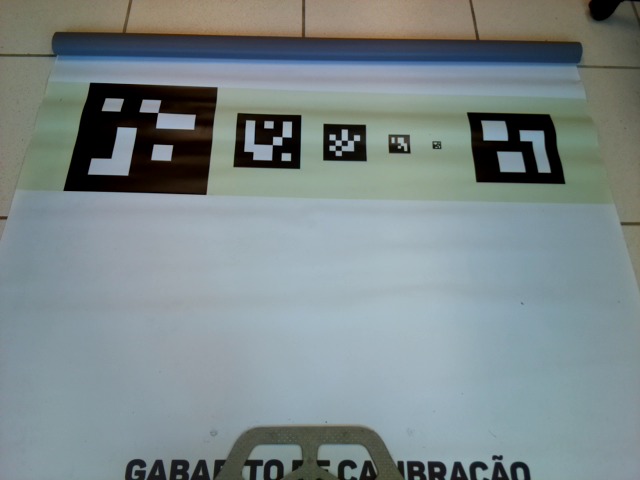
At the time, I was working on a new calibration software and sheet, but it was clear this issue was a top priority. My managers were not very impressed though; their behavior was always like “if it works, it works”, although they certainly asked us to not mention it to the CEO.
Then I had the idea to fix it. At the time I was already interacting with the sensor’s codes and understood what needed to be done. So I implemented a multiple approach solution on my own: I reduced the FOV of the camera and added proper threading management to the script. It was fixed!
The results were a system that would reach at least 90 % accuracy in the required speed ranges (self‑proppeled sprayers operate between 15‑23 km/h typically).
Year two
I don’t recall doing anything very interesting for this year; I was mostly re‑formatting and fixing many bugs in the project. Most of the project’s scripts were rewritten by me and significantly improved, but were not released due to the managers.
I always assumed they’re content with their positions and would not try to push the boundaries to develop a better product. Their behavior was very responsive: the CEO requested something, they’d rush to do it, otherwise nothing would happen.
At the end of the year, I was invited to participate on a project to use our sensor system to water eucalyptus plants. My manager was trying to do it silently, on his own, but could not make it work. Here is where I walk in, like a retard trying to do something that can actually improve other peoples lives (which is cool).
I solved the issue; by November I’d developed a version that was delivering >99 % accuracy on eucalyptus plants, with my own algorithms for eucalyptus segmentation and valve activation.
Anyways, after that, they literally ignored me; I guess secrecy was to patent a device that they did not make — it felt very counter‑productive.
Year three
That’s the year where I made some significant improvements to the product. Everything was already setup from my second year but was left unreleased. I implemented IaC for the sensor, many new segmentation algorithms and even upgraded some test practices. I’d done so much this year that I actually made a LinkedIn post so I could set it as a benchmark for myself.
🔗 Read the original LinkedIn post
Below is that section translated into English:
- Savefarm Spraying: six update packages containing three new detection algorithms were delivered this year alone to meet our customers’ feature requests.
- Savefarm Irrigation: a project started in mid‑2023 delivered its first production version. The end result was the sale of 30 + units to our client/partner Eldorado Brasil Celulose S.A.
- IaC adoption: we rolled out Infrastructure‑as‑Code to manage the OS for all products in production, simplifying version control and debugging.
- Two new internal R&D products: including a prototype that uses two cameras simultaneously in our sensors.
- Maintenance of three other products: such as the Savefarm Calibrator, in use across dealerships in Brazil and Argentina.
- Dozens of Python tests + a HIL server: we implemented extensive automated tests and built a Hardware‑in‑the‑Loop testing server.
This are just the most important things, I’ve done much more than that, actually (while keeping up with new AI practices).
A conclusion
At the beginning of 2024, I decided to quit. I simply felt that AI was going to take over and I had to stay ahead of the competition in something that is much bigger than the internet. A huge opportunity!
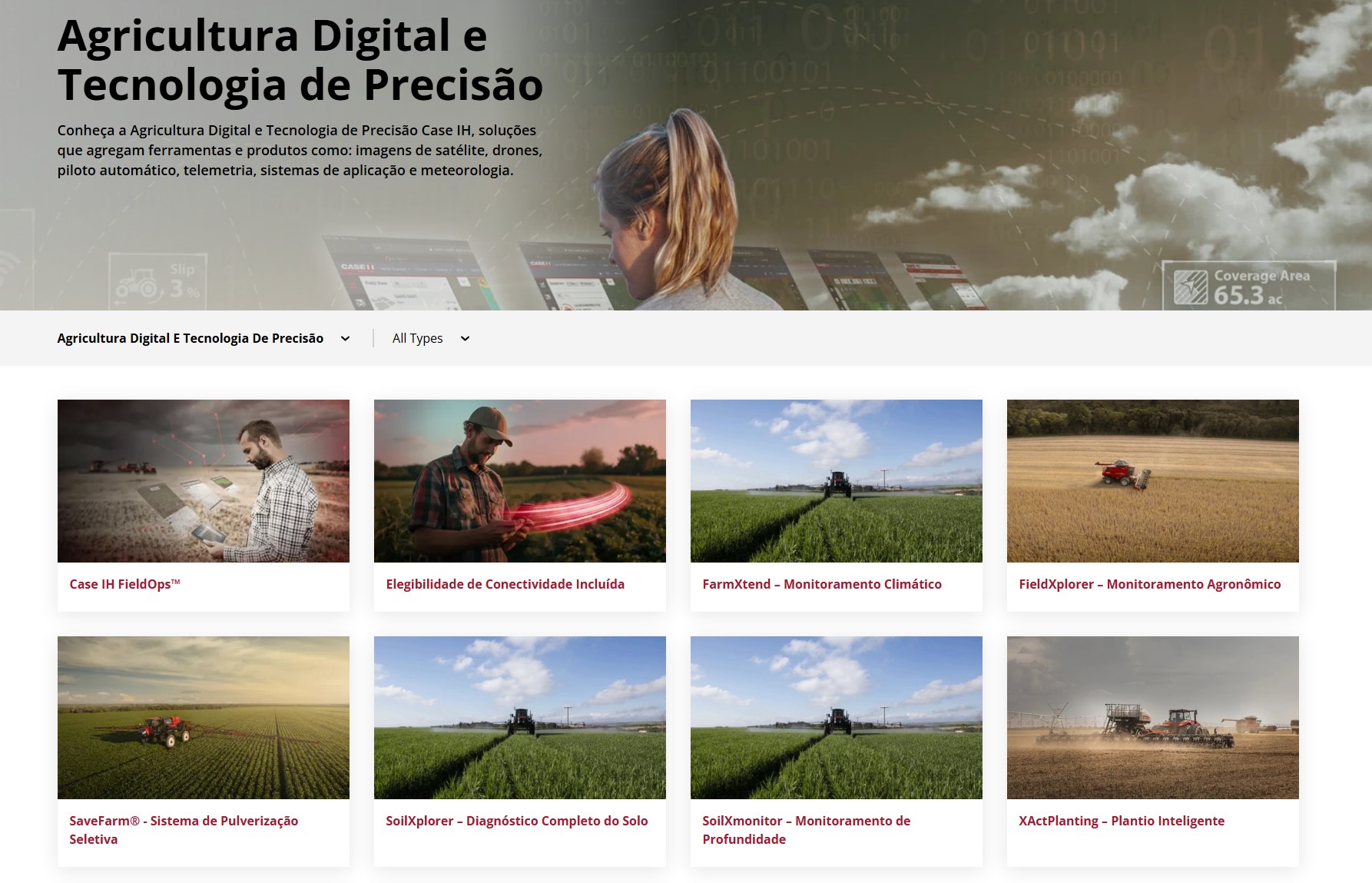
Meanwhile, Savefarm had been dealing with CNH Industrial from 2023. At the time CNH Brazil’s branch was trying to find a viable supplier of spot‑spraying technology to equip their product. The players were: Bosch’s One Spray and Savefarm.
The talks increased by mid‑2024 and now they finally closed a deal: CNH × Savefarm. At this point I already quit the company and moved to other projects, but it definitely feels nice to have my software work validated.
Of course this deal wasn’t made by myself; both the sales and marketing teams as well as the agronomic engineers worked constantly to actually make the software work — since most of the input configurations are done manually.
With this, I finally put an end to this phase of my life and move on to the next. I did not own company stock or whatever, so this deal would not affect me in the slightest if I had stayed on the company until now other than the credibility, which I now have.
I congratulate all of the Savefarm team for this incredible achievement — beating a global corporation such as Bosch is not an easy task.
Check out Savefarm at Case IH:
🔗 Savefarm on Case IH’s website
I move on to new and better things.